I went to the Community Alliance meeting today and learned about several interesting happenings. It was a good thing it was interesting, because the meeting was held in the Community Center where there is little or no heat - and I was freezing!
I'll start with my favorite. Regular readers of this blog know I'm a big proponent of cultivating the arts in Natchez. (To see a list of previous articles on this blog, just click on Art in the Labels to the right.) Hedy Boelte and Jennifer Ogden gave a presentation on behalf of the newly created Natchez Council for Arts and got me all excited. They are so energetic and full of ideas, and you definitely get the impression they'll accomplish what they set out to do. They were asking the Community Alliance (which is a 501c3 organization) to serve as a "pass through" for grant funds they're applying for. Once the Council is established, they can apply for their own 501c3 status, but they need help getting started. The Alliance agreed unanimously to provide this assistance.
The Council's emphasis now is on Margaret Martin Hall. They intend to quickly spruce up the auditorium, so that you will notice a big improvement for the Festival of Music this year. But they have big plans for that historic building. There has been talk about the possibility of establishing an art school in Natchez, along the lines of the Savannah College of Art and Design. They think this might be a bit much to accomplish. Instead they have in mind setting up an Institute, where renowned artists and teachers come to teach classes, similar to Penland School of Crafts in North Carolina. In fact, they have already lined up some exceptional teachers for these classes, which they hope to start this summer. This is really exciting for Natchez!
Eracism is the slogan of the group ERACE, which was formed in New Orleans in the summer of 1993. Their mission is: We seeks ways, through person to person communication, to show that we are committed to treating fellow human beings of all colors with love and respect. A Natchez chapter is being formed, and they are looking for volunteers to help. Email or call 504.866.1163 if you're interested in being involved.
The Ministerial Alliance is establishing a Disaster Preparedness Network, so that Natchez will be prepared for the next disaster. For more information, contact John Larson at First Presbyterian Church.
God bless Sally Durkin! What would Natchez do without her? She told the Community Alliance about the incentive package that Mississippi is putting together to attract film and movie makers - similar to what Louisiana has done so successfully. She has put together a presentation with video and still photos to demonstrate the attraction of Natchez as a location for films. She is looking for money to go to Hollywood with Jennifer Ogden to make this presentation to the location managers. Knowing Sally, she'll get the money and impress the hell out of Hollywood, and Natchez will be overflowing with film crews soon.
Natchez is getting a 12 passenger van to transport veterans to their medical appointments at the VA Center in Jackson. The van was donated by the Disabled American Veterans, through donations and county appropriations. The VA will provide all operating expenses. However, volunteer drivers are needed to complete the program. If you or your organization are willing to help, contact Erle Drane with the City Veterans Service Office at 601.445.8706. Look for his Top of the Morning column on this topic soon.
Although the purpose of the meeting was to select a community project for 2007, only one project was presented. There were several people who could not attend, so it was decided to put off that decision until the next meeting.
The one project that was presented was to have the Community push to obtain the funds to purchase the third and last piece of property for the Forks of the Road project.
From now on the Community Alliance will meet on the fourth Wednesday of each month at 4:30 in the Vicksburg Room at the Convention Center - which hopefully is heated. If you want to be added to the email notification list, contact Brett Brinegar.
Wednesday, January 17, 2007


Monday, January 15, 2007
Unconstitutional Bluff Display?
If you read the Democrat today, you saw a front page article, with pictures, about a display on the Bluffs that might be unconstitutional.
Virginia O'Beirne, on behalf of Pro Life Natchez Adams County, went before the Mayor and Board of Aldermen on November 28 to request permission to arrange a temporary display on the bluffs to commemorate the anniversary of the Supreme Court Decision of Roe v Wade. The Board voted to take the matter under advisement and allow the City Attorney to research the matter.
At its Tuesday meeting, the Board voted to allow the display. When questioned after the meeting, the City Attorney felt the Board could not deny the request because the City did not have an ordinance regarding displays on the bluff. He added that he had been requested to draw up a ordinance for the Board to adopt. (Wouldn't it be nice if the Board asks for public opinion prior to adopting it?)
If the display had been as it was described by Ms O'Beirne, there likely would not have been a problem. She simply said there would be 4000 pink and blue flags. When asked by Alderman Pollard to describe the display, she again said there would be 4000 flags, taking up about 63 square feet, with a small sign explaining the display. I was there, and at no time did Ms O'Beirne mention that words and pictures would be on the flags. In fact, she said her group chose to have the display on public property so no denominational statement would be made. (You can read the Minutes of the Board meeting here.) .
I was pretty shocked to read the paper today and find that the flags were not blank, as I imagined. The blue flags have a cross and say "Jesus Forgives". Now we have a problem! The First Amendment of the US Constitution provides for separation of church and state, and there have been several Supreme Court rulings about religious displays on public property.
The Democrat must think it's a problem also, since their readers' poll today said: "Is the anti-abortion exhibit on the bluff appropriate for public land?" At this time, the No's have a slight lead over the Yes's, with 180 people voting. Since this community is probably predominantly pro life, those results tell me that religious freedom and the First Amendment are more important.
Virginia O'Beirne, on behalf of Pro Life Natchez Adams County, went before the Mayor and Board of Aldermen on November 28 to request permission to arrange a temporary display on the bluffs to commemorate the anniversary of the Supreme Court Decision of Roe v Wade. The Board voted to take the matter under advisement and allow the City Attorney to research the matter.
At its Tuesday meeting, the Board voted to allow the display. When questioned after the meeting, the City Attorney felt the Board could not deny the request because the City did not have an ordinance regarding displays on the bluff. He added that he had been requested to draw up a ordinance for the Board to adopt. (Wouldn't it be nice if the Board asks for public opinion prior to adopting it?)
If the display had been as it was described by Ms O'Beirne, there likely would not have been a problem. She simply said there would be 4000 pink and blue flags. When asked by Alderman Pollard to describe the display, she again said there would be 4000 flags, taking up about 63 square feet, with a small sign explaining the display. I was there, and at no time did Ms O'Beirne mention that words and pictures would be on the flags. In fact, she said her group chose to have the display on public property so no denominational statement would be made. (You can read the Minutes of the Board meeting here.) .
I was pretty shocked to read the paper today and find that the flags were not blank, as I imagined. The blue flags have a cross and say "Jesus Forgives". Now we have a problem! The First Amendment of the US Constitution provides for separation of church and state, and there have been several Supreme Court rulings about religious displays on public property.
The Democrat must think it's a problem also, since their readers' poll today said: "Is the anti-abortion exhibit on the bluff appropriate for public land?" At this time, the No's have a slight lead over the Yes's, with 180 people voting. Since this community is probably predominantly pro life, those results tell me that religious freedom and the First Amendment are more important.
Natchez Values
I received an email after I posted the article about the history of the Bluffs by Stanley Nelson. I thought it was interesting, so I am sharing it with you - with permission from the author who wishes to remain anonymous.
When you look at the history of Natchez, you see that these patterns go all the way back to the birth of the city. Everything was basically laid out for us. When I say us, I mean the elite that ran the city then and continue to run it now. We never needed to develop an ethic based on industry and thrift. There was always an easy way. We extracted everything we could from the soil until it was gone. We extracted everything we could from the black man until he was freed, then recommenced the process for another 100 years until he was freed a second time. We extracted most of the timber. Then just when things looked really bad, we found oil and extracted that. When that ran out we looked around again for the next thing that would save us, even courting the film people, who would make romantic fantasies of “our way of life”. But then, Deus Ex Machina! Up the river came the gambling boats with the promise of easy pickings once again, and off we went. Big time extraction of money itself this time—and from those who had the least of it.
What I'm saying is I think there is in Natchez a culture much more akin to that of Latin America (after all the Spaniards and the French were the first of the colonists), than to the US. Values like hard work, education, openness to change, debate in open town meetings, even democracy--- the TRUE American values-- never got a foothold here. And we're seeing it today. An attitude of "I get mine; you get yours". Everything done by cabal, behind closed doors, for the benefit of the insiders. No vision, no commonweal, no investment in public facilities, except when necessary to serve certain private interests. For god's sake, we can't even commit the money to maintain the trees in our parks.
I've always found that people who inherit money have a very different attitude than people who make money; for the former, there is no more after that so they hoard and fear the future. For the latter, there is always more to come so they can be generous and welcome the future. For a city that lives in its past and relies only on what was handed down to it, it is the same: a mentality that there is only one pie, and you have to get your piece of it before your neighbor gets it. Particularly if he is of the opposite race. How sad.
When you look at the history of Natchez, you see that these patterns go all the way back to the birth of the city. Everything was basically laid out for us. When I say us, I mean the elite that ran the city then and continue to run it now. We never needed to develop an ethic based on industry and thrift. There was always an easy way. We extracted everything we could from the soil until it was gone. We extracted everything we could from the black man until he was freed, then recommenced the process for another 100 years until he was freed a second time. We extracted most of the timber. Then just when things looked really bad, we found oil and extracted that. When that ran out we looked around again for the next thing that would save us, even courting the film people, who would make romantic fantasies of “our way of life”. But then, Deus Ex Machina! Up the river came the gambling boats with the promise of easy pickings once again, and off we went. Big time extraction of money itself this time—and from those who had the least of it.
What I'm saying is I think there is in Natchez a culture much more akin to that of Latin America (after all the Spaniards and the French were the first of the colonists), than to the US. Values like hard work, education, openness to change, debate in open town meetings, even democracy--- the TRUE American values-- never got a foothold here. And we're seeing it today. An attitude of "I get mine; you get yours". Everything done by cabal, behind closed doors, for the benefit of the insiders. No vision, no commonweal, no investment in public facilities, except when necessary to serve certain private interests. For god's sake, we can't even commit the money to maintain the trees in our parks.
I've always found that people who inherit money have a very different attitude than people who make money; for the former, there is no more after that so they hoard and fear the future. For the latter, there is always more to come so they can be generous and welcome the future. For a city that lives in its past and relies only on what was handed down to it, it is the same: a mentality that there is only one pie, and you have to get your piece of it before your neighbor gets it. Particularly if he is of the opposite race. How sad.
Saturday, January 13, 2007
"All that I know is just what I read in the paper"
"All that I know is just what I read in the paper" (Will Rogers 1879-1935, American humorist and social commentator)
I was born and raised in a city with three daily newspapers (one morning - two evening) and my family had delivered (and read) two a day. Because the competition for circulation was so intense the papers vigorously competed to find, examine, and report as much information of local interest as possible. When you lived in a big (notorious) place like New Orleans there was always something dubious (usually local government related) going on and the papers were constantly digging and reporting on the real story (behind the story).
Not long ago most folks relied on the paper to keep them not only informed about but actively engaged in local events. It kept the city government and all public institutions and organizations on their toes and looking over their shoulders. That's the kind of papers Will was talking about. That was a healthy state of affairs.
Television just doesn't have the time to look deep into most everything going on and in a place like Natchez that has no local news station we get no such help at all from the tube.
In Natchez government and public institutions have been mostly immune from close scrutiny. Almost weekly strange, unusual, and questionable things are going on. We may wonder about it but we just don't have the information and details we'd need to pass judgement and perhaps take action to object.
"I never met a Natchez Democrat staffer I didn't like" (Me 1939-, Natchez curmudgeon and thunker)
The Democrat has good, talented, and hard working folks. It's not the people who are failing to dig, detail, and report, it's the paper's policy objectives that are at fault. (as is usually the case in organizational problems - it's the structure NOT the people) Fluff, human interest, school - club - social events, giant front page photos, appear to be what they think will hold our interest and sell advertising (and sell it they do - the weight of the week's advertising inserts rivals the weight of the newspaper).
Recently I have seen the beginnings of a shift toward a healthy curiosity in the editorials. They should encouraged to continue and increase their level of healthy curiosity.
"If all we know is just what we read in the paper, we don't know much"
I was born and raised in a city with three daily newspapers (one morning - two evening) and my family had delivered (and read) two a day. Because the competition for circulation was so intense the papers vigorously competed to find, examine, and report as much information of local interest as possible. When you lived in a big (notorious) place like New Orleans there was always something dubious (usually local government related) going on and the papers were constantly digging and reporting on the real story (behind the story).
Not long ago most folks relied on the paper to keep them not only informed about but actively engaged in local events. It kept the city government and all public institutions and organizations on their toes and looking over their shoulders. That's the kind of papers Will was talking about. That was a healthy state of affairs.
Television just doesn't have the time to look deep into most everything going on and in a place like Natchez that has no local news station we get no such help at all from the tube.
In Natchez government and public institutions have been mostly immune from close scrutiny. Almost weekly strange, unusual, and questionable things are going on. We may wonder about it but we just don't have the information and details we'd need to pass judgement and perhaps take action to object.
"I never met a Natchez Democrat staffer I didn't like" (Me 1939-, Natchez curmudgeon and thunker)
The Democrat has good, talented, and hard working folks. It's not the people who are failing to dig, detail, and report, it's the paper's policy objectives that are at fault. (as is usually the case in organizational problems - it's the structure NOT the people) Fluff, human interest, school - club - social events, giant front page photos, appear to be what they think will hold our interest and sell advertising (and sell it they do - the weight of the week's advertising inserts rivals the weight of the newspaper).
Recently I have seen the beginnings of a shift toward a healthy curiosity in the editorials. They should encouraged to continue and increase their level of healthy curiosity.
"If all we know is just what we read in the paper, we don't know much"
Thursday, January 11, 2007
Congress Tells Natchez: Preserve Bluff 'Green' Forever
Stanley Nelson, editor of the Concordia Sentinel, has an excellent article in this week's issue about the history of the Natchez Bluffs. With his permission, I am reprinting it here. Obviously, political fights over keeping the Bluffs as public property is nothing new. However, those Bluffs have somehow survived as public property for over 200 years. Let's hope they continue to be so.
More than 200 years ago Congress made a covenant with the City of Natchez over the strip of land that serves as a public park along the bluff today.
On Saturday, March 10, 1804, a Congressional committee reported to the U.S. House of Representatives that it "cannot avoid considering" the "prosperity" of the "infant city" of Natchez "as a matter of some national importance." As one symbol of that importance, Congress decided to insure that a portion of the bluff property be forever maintained as a public green, or commons, for citizens and visitors to enjoy.
LAND DISPUTE
It all began as a land dispute. Congress was caught in the middle, and growing tired of the issue before a resolution was reached. Events leading up to this entanglement began several years earlier. In the late 1700s, Stephen Minor, an American who spent decades in service to Spain, owned 300 beautiful acres along the bluff. He sold this prime real estate to the Spanish government for $2,000.
Spanish commander Carlos de Grand-Pre' saw the need to set aside a portion of this bluff acreage for the citizens. Historian Jack Holmes said Grand-Pre' realized that a "large plaza, which seemed out of proportion to the small nucleus (of the tiny settlement)" would "seem more suitable as the town grew in size."
Manuel Gayoso de Lemos served as governor of the Natchez District during the 1790s and, accorded to Holmes, "He (Gayoso) created a public green or park which remained undivided into residential lots." Holmes said Gayoso "drew a line from Front Street, facing the bluffs, and forbade the granting of lots west of it." The governor saw not only the need for a green, or commons, for Natchez citizens and visitors, but he also wanted a "buffer zone" between the river and the town to prevent the spread of diseases and other illnesses believed to be associated with water in those days, an idea Congress later embraced.
CONGRESS INVOLVED
In 1801, the city was incorporated after the territorial capital of Mississippi was moved from Natchez to the nearby village of Washington. Congress had previously set aside land for the construction of Jefferson College and some wanted the school to be located along the bluffs. Natchez officials thought the land should be preserved as it had been during the Spanish era as a public park. And William Dunbar, a founder and trustee of the proposed college, submitted documentation that some of the property had been deeded to him by the Spanish when they possessed the Natchez District.
During the early 1800s, the issues involving this bluff property landed in the lap of Congress. Two congressmen reported directly to the House of Representatives on the matter -- Thomas Mann Randolph of Virginia, the son-in-law of President Thomas Jefferson, and Andrew Gregg of Pennsylvania. Also involved was William Lattimore, a delegate to Congress from the Mississippi Territory. During this time frame, Dunbar -- the explorer, scientist, surveyor and planter -- was involved in a regular correspondence with Jefferson over matters involving the future of the country, science and exploration. Jefferson held Dunbar in high esteem, and the Scotsman was the President's eyes and ears in this section of the country. In fact, following the Louisiana Purchase in 1803, Dunbar, at the request of Jefferson, led an expedition up the Ouachita in 1804-05 to explore the river from present day Jonesville to the hot springs in present day Arkansas. Dunbar also helped plan the Red River Expedition.
Before the Spanish transferred the Natchez District to the Americans in March 1798, Dunbar had been granted 26 acres of the bluff property by Gayoso in payment for surveying services. But there was a question as to whether the transfer was legal since it was made after the Spanish gave up the Natchez District by treaty but before they actually transferred possession of the city to the U.S.
DUNBAR'S STANCE
As one of the early promoters of Jefferson College, Dunbar addressed the property and college issues in a letter to Jefferson dated Sunday, Jan. 8, 1804. The proposed college had already been named in honor of the President.
Dunbar wrote: "I am concerned to observe that a resolution" that would "deprive Jefferson College of 30 acres of land granted by the late Congress and to give the same to the City of Natchez. The Town of Natchez is not in distress, the Corporation has been empowered by this legislature to levy taxes, more than sufficient for their expences, upon all property within the liberties of the town. The College is in absolute poverty: The Trustees, reckoning upon the thirty acres as an object immediately productive, have passed a resolution, to prepare plans & contract for the erection of the most necessary buildings; if the 30 acres are taken away, the progress of the College must be arrested. Our public treasury has been so poor (& so unreasonable an aversion from paying taxes prevails) that the College has received no aid from the territory: private Contribution has not gone beyond the narrow Circle of a few public Spirited individuals; the Section reserved by Congress will not very Speedily be productive; hence if our newly created town Corporation obtains a victory over the College, the poor Seminary will be absolutely nipped in the bud."
Congress reviewed the matter for three years, from 1803 to 1806, in three successive sessions. Lattimore's committee reported that "when the town of Natchez was laid off by the Spanish government, the land between the front street" of Natchez "and the bluff of the Mississippi river was reserved for the convenience, comfort, and health of the inhabitants; and that two lots, on which a parsonage house is yet standing, were appropriated for the use of the clergy."
Lattimore continued: "It also appears, from an instrument bearing date the 19th (Wednesday) April, 1797, that the aforementioned land in front of the town was granted by the Spanish governor, Gayoso, to...William Dunbar, as compensation for services rendered by the said memorialist...." Further, Lattimore said the governor of Mississippi Territory, based on a Congressional act, claimed the land for use of Jefferson College.
Dunbar presented his case in writing before Congress, snapping that "the legality of your petitioner's (Dunbar) title, has engendered in the mind of the infant corporation of the town of Natchez, a possibility of snatching from your petitioner the well-earned fruits of his labor in the service of the former government..."
JEFFERSON'S SON-IN-LAW
After taking evidence and mulling over the matter, Congress wisely determined that the dispute should be settled locally, but made an important provision, reporting that "said land be neither cultivated nor occupied with buildings, but be planted with trees, and preserved as a common for the use, comfort, and health, of the inhabitants" of Natchez.
But it was the report of Randolph, the son-in-law of Jefferson, that eloquently conveyed the importance of the new city of Natchez to the country. Part of the importance was due to the Mississippi River."The Mississippi must soon become the greatest highway on the earth," reported Randolph. "Its long arms extended in every direction throughout the greatest and most valuable portions of the globe..."
Randolph said the "diffusion of American principles and American arts through all the wide space it embraces; the occupancy of this whole fertile surface by American citizens, is now insured beyond all risk. The immense wealth which will be produced by the industry and ingenuity of those citizens, with the aid of soils superior to all, and climates inferior to none on the earth...(will)...be carried for the purpose of exchange along the highway."
Natchez, Randolph reported, "is an inn established upon it (the Mississippi) in a chosen spot. There, the thousands of American citizens, engaged in the transportation, and the superintendence of the transportation...will stop for refreshment and for rest." In time, Congress felt Natchez would be "constantly fringed with boats, and its banks be covered with American citizens..."
This was part of the importance of this "narrow strip of land" which "extends very nearly along the whole front of the city upon the river, and separates the buildings of it by a convenient distance from the water." If the city's request to keep this land open is granted "it may preserve it as an open space, next (to) the water, for the joint accommodation of the citizens, and those strangers when they land."
Otherwise, "buildings will quickly extend to the water's edge" and a "dreadful insalubrity must be the certain consequence."Randolph said science and experience have taught other "great maritime cities" of the U.S. that the "germ of pestilence...always develops first in the dense and stagnant air of those streets and buildings which lie nearest the water." During certain seasons, this "pestilential contagion" could quickly spread throughout the city.This open space of land on the bluff, said Randolph, would be a buffer to "this tremendous agent of human misery." He said "an occasion offers itself to the Government of the United States to make this important experiment in the city of Natchez at this time...The day cannot be very distance on which, if pestilence arises in Natchez, it may ramify itself with the wide spread arms of the Mississippi, through the vitals of the Union." Thus, a local health problem in Natchez could be become a national problem as disease would be spread by those landing and debarking from the shores of the Mississippi at Natchez.
These were the reasons Randolph and his select committee felt it so important that Congress grant this "strip of land to the city of Natchez, on condition that it shall be preserved forever as a public ground for the health, comfort, and enjoyment of all citizens and strangers indiscriminately; and shall never be built on, or cultivated; but, on the contrary, shall be disposed into public walks and lawns, and planted with trees, at the expense of the corporation, and so maintained by it as long as it exists."
JACKSON IMPRESSED
In the early 1800s, Joseph H. Ingraham noted that Natchez consisted of six streets "at right angles with the river, intersected by seven others of the same length, parallel with the stream. The front, or first parallel street, is laid out about 100 yards back from the verge of the bluff, leaving a noble green esplanade along the front of the city, which not only adds to its beauty, but is highly useful as a promenade and parade ground."
Ingraham said that "shade trees are planted along the border, near the verge of the precipice, beneath which are placed benches, for the comfort of the lounger. From this place the eye commands one of the most extensive prospects to be found on the Mississippi."
It was on these beautiful grounds that a future president once stood. In January of 1813, Gen. Andrew Jackson led 3,000 Tennessee volunteers down the Cumberland, Ohio and Mississippi rivers en route to New Orleans, a city the British were expected to attack. It was a long, cold journey, and the boats cut through ice along part of the voyage.
When Jackson and his weary men reached Natchez in February they looked atop the bluff and saw people everywhere awaiting their arrival. "On our landing at Natchez," Jackson recalled, "the strand was crowded with spectators welcoming the largest army that ever appeared in view of Natchez." He and his men never forgot the greeting.
SETTLEMENT REACHED
Legal entanglements involving Natchez and Jefferson College continued for years. William Dunbar died six years before the matter was settled.The college, eventually built at nearby Washington, never reached the lofty dreams of its founders by becoming a premiere American university, and that's due primarily to warring political factions. Historian D. Clayton James in his book "Antebellum Natchez," said that initially "the school would be known as a stillborn child with the politicians....serving as muddled midwives."
Not until 1816 did the city gain clear title to the bluff property, and that came with a $6,000 price tag in payment to Jefferson College in settlement.
For a while, Congress's grand prediction that Natchez might become a great national city due to its position on the Mississippi seemed well founded. But the flow of riverboats and the people they deposited at Natchez eventually halted as transportation changed with the advent of the railroads and eventually the automobile. Petty and personal politics doomed the growth of Natchez and the capital of the Mississippi Territory, already relocated to Washington, eventually was removed from Adams County all together in favor of Jackson.
But, my, what a beautiful view the city property along the bluff has provided through the past 200 years for countless local citizens and visitors, who continue to this day to walk along the bluff top and gaze down on the Mississippi and at Concordia across the river.
This ground belongs to the people, Congress said, and this ground shall be "preserved forever."
More than 200 years ago Congress made a covenant with the City of Natchez over the strip of land that serves as a public park along the bluff today.
On Saturday, March 10, 1804, a Congressional committee reported to the U.S. House of Representatives that it "cannot avoid considering" the "prosperity" of the "infant city" of Natchez "as a matter of some national importance." As one symbol of that importance, Congress decided to insure that a portion of the bluff property be forever maintained as a public green, or commons, for citizens and visitors to enjoy.
LAND DISPUTE
It all began as a land dispute. Congress was caught in the middle, and growing tired of the issue before a resolution was reached. Events leading up to this entanglement began several years earlier. In the late 1700s, Stephen Minor, an American who spent decades in service to Spain, owned 300 beautiful acres along the bluff. He sold this prime real estate to the Spanish government for $2,000.
Spanish commander Carlos de Grand-Pre' saw the need to set aside a portion of this bluff acreage for the citizens. Historian Jack Holmes said Grand-Pre' realized that a "large plaza, which seemed out of proportion to the small nucleus (of the tiny settlement)" would "seem more suitable as the town grew in size."
Manuel Gayoso de Lemos served as governor of the Natchez District during the 1790s and, accorded to Holmes, "He (Gayoso) created a public green or park which remained undivided into residential lots." Holmes said Gayoso "drew a line from Front Street, facing the bluffs, and forbade the granting of lots west of it." The governor saw not only the need for a green, or commons, for Natchez citizens and visitors, but he also wanted a "buffer zone" between the river and the town to prevent the spread of diseases and other illnesses believed to be associated with water in those days, an idea Congress later embraced.
CONGRESS INVOLVED
In 1801, the city was incorporated after the territorial capital of Mississippi was moved from Natchez to the nearby village of Washington. Congress had previously set aside land for the construction of Jefferson College and some wanted the school to be located along the bluffs. Natchez officials thought the land should be preserved as it had been during the Spanish era as a public park. And William Dunbar, a founder and trustee of the proposed college, submitted documentation that some of the property had been deeded to him by the Spanish when they possessed the Natchez District.
During the early 1800s, the issues involving this bluff property landed in the lap of Congress. Two congressmen reported directly to the House of Representatives on the matter -- Thomas Mann Randolph of Virginia, the son-in-law of President Thomas Jefferson, and Andrew Gregg of Pennsylvania. Also involved was William Lattimore, a delegate to Congress from the Mississippi Territory. During this time frame, Dunbar -- the explorer, scientist, surveyor and planter -- was involved in a regular correspondence with Jefferson over matters involving the future of the country, science and exploration. Jefferson held Dunbar in high esteem, and the Scotsman was the President's eyes and ears in this section of the country. In fact, following the Louisiana Purchase in 1803, Dunbar, at the request of Jefferson, led an expedition up the Ouachita in 1804-05 to explore the river from present day Jonesville to the hot springs in present day Arkansas. Dunbar also helped plan the Red River Expedition.
Before the Spanish transferred the Natchez District to the Americans in March 1798, Dunbar had been granted 26 acres of the bluff property by Gayoso in payment for surveying services. But there was a question as to whether the transfer was legal since it was made after the Spanish gave up the Natchez District by treaty but before they actually transferred possession of the city to the U.S.
DUNBAR'S STANCE
As one of the early promoters of Jefferson College, Dunbar addressed the property and college issues in a letter to Jefferson dated Sunday, Jan. 8, 1804. The proposed college had already been named in honor of the President.
Dunbar wrote: "I am concerned to observe that a resolution" that would "deprive Jefferson College of 30 acres of land granted by the late Congress and to give the same to the City of Natchez. The Town of Natchez is not in distress, the Corporation has been empowered by this legislature to levy taxes, more than sufficient for their expences, upon all property within the liberties of the town. The College is in absolute poverty: The Trustees, reckoning upon the thirty acres as an object immediately productive, have passed a resolution, to prepare plans & contract for the erection of the most necessary buildings; if the 30 acres are taken away, the progress of the College must be arrested. Our public treasury has been so poor (& so unreasonable an aversion from paying taxes prevails) that the College has received no aid from the territory: private Contribution has not gone beyond the narrow Circle of a few public Spirited individuals; the Section reserved by Congress will not very Speedily be productive; hence if our newly created town Corporation obtains a victory over the College, the poor Seminary will be absolutely nipped in the bud."
Congress reviewed the matter for three years, from 1803 to 1806, in three successive sessions. Lattimore's committee reported that "when the town of Natchez was laid off by the Spanish government, the land between the front street" of Natchez "and the bluff of the Mississippi river was reserved for the convenience, comfort, and health of the inhabitants; and that two lots, on which a parsonage house is yet standing, were appropriated for the use of the clergy."
Lattimore continued: "It also appears, from an instrument bearing date the 19th (Wednesday) April, 1797, that the aforementioned land in front of the town was granted by the Spanish governor, Gayoso, to...William Dunbar, as compensation for services rendered by the said memorialist...." Further, Lattimore said the governor of Mississippi Territory, based on a Congressional act, claimed the land for use of Jefferson College.
Dunbar presented his case in writing before Congress, snapping that "the legality of your petitioner's (Dunbar) title, has engendered in the mind of the infant corporation of the town of Natchez, a possibility of snatching from your petitioner the well-earned fruits of his labor in the service of the former government..."
JEFFERSON'S SON-IN-LAW
After taking evidence and mulling over the matter, Congress wisely determined that the dispute should be settled locally, but made an important provision, reporting that "said land be neither cultivated nor occupied with buildings, but be planted with trees, and preserved as a common for the use, comfort, and health, of the inhabitants" of Natchez.
But it was the report of Randolph, the son-in-law of Jefferson, that eloquently conveyed the importance of the new city of Natchez to the country. Part of the importance was due to the Mississippi River."The Mississippi must soon become the greatest highway on the earth," reported Randolph. "Its long arms extended in every direction throughout the greatest and most valuable portions of the globe..."
Randolph said the "diffusion of American principles and American arts through all the wide space it embraces; the occupancy of this whole fertile surface by American citizens, is now insured beyond all risk. The immense wealth which will be produced by the industry and ingenuity of those citizens, with the aid of soils superior to all, and climates inferior to none on the earth...(will)...be carried for the purpose of exchange along the highway."
Natchez, Randolph reported, "is an inn established upon it (the Mississippi) in a chosen spot. There, the thousands of American citizens, engaged in the transportation, and the superintendence of the transportation...will stop for refreshment and for rest." In time, Congress felt Natchez would be "constantly fringed with boats, and its banks be covered with American citizens..."
This was part of the importance of this "narrow strip of land" which "extends very nearly along the whole front of the city upon the river, and separates the buildings of it by a convenient distance from the water." If the city's request to keep this land open is granted "it may preserve it as an open space, next (to) the water, for the joint accommodation of the citizens, and those strangers when they land."
Otherwise, "buildings will quickly extend to the water's edge" and a "dreadful insalubrity must be the certain consequence."Randolph said science and experience have taught other "great maritime cities" of the U.S. that the "germ of pestilence...always develops first in the dense and stagnant air of those streets and buildings which lie nearest the water." During certain seasons, this "pestilential contagion" could quickly spread throughout the city.This open space of land on the bluff, said Randolph, would be a buffer to "this tremendous agent of human misery." He said "an occasion offers itself to the Government of the United States to make this important experiment in the city of Natchez at this time...The day cannot be very distance on which, if pestilence arises in Natchez, it may ramify itself with the wide spread arms of the Mississippi, through the vitals of the Union." Thus, a local health problem in Natchez could be become a national problem as disease would be spread by those landing and debarking from the shores of the Mississippi at Natchez.
These were the reasons Randolph and his select committee felt it so important that Congress grant this "strip of land to the city of Natchez, on condition that it shall be preserved forever as a public ground for the health, comfort, and enjoyment of all citizens and strangers indiscriminately; and shall never be built on, or cultivated; but, on the contrary, shall be disposed into public walks and lawns, and planted with trees, at the expense of the corporation, and so maintained by it as long as it exists."
JACKSON IMPRESSED
In the early 1800s, Joseph H. Ingraham noted that Natchez consisted of six streets "at right angles with the river, intersected by seven others of the same length, parallel with the stream. The front, or first parallel street, is laid out about 100 yards back from the verge of the bluff, leaving a noble green esplanade along the front of the city, which not only adds to its beauty, but is highly useful as a promenade and parade ground."
Ingraham said that "shade trees are planted along the border, near the verge of the precipice, beneath which are placed benches, for the comfort of the lounger. From this place the eye commands one of the most extensive prospects to be found on the Mississippi."
It was on these beautiful grounds that a future president once stood. In January of 1813, Gen. Andrew Jackson led 3,000 Tennessee volunteers down the Cumberland, Ohio and Mississippi rivers en route to New Orleans, a city the British were expected to attack. It was a long, cold journey, and the boats cut through ice along part of the voyage.
When Jackson and his weary men reached Natchez in February they looked atop the bluff and saw people everywhere awaiting their arrival. "On our landing at Natchez," Jackson recalled, "the strand was crowded with spectators welcoming the largest army that ever appeared in view of Natchez." He and his men never forgot the greeting.
SETTLEMENT REACHED
Legal entanglements involving Natchez and Jefferson College continued for years. William Dunbar died six years before the matter was settled.The college, eventually built at nearby Washington, never reached the lofty dreams of its founders by becoming a premiere American university, and that's due primarily to warring political factions. Historian D. Clayton James in his book "Antebellum Natchez," said that initially "the school would be known as a stillborn child with the politicians....serving as muddled midwives."
Not until 1816 did the city gain clear title to the bluff property, and that came with a $6,000 price tag in payment to Jefferson College in settlement.
For a while, Congress's grand prediction that Natchez might become a great national city due to its position on the Mississippi seemed well founded. But the flow of riverboats and the people they deposited at Natchez eventually halted as transportation changed with the advent of the railroads and eventually the automobile. Petty and personal politics doomed the growth of Natchez and the capital of the Mississippi Territory, already relocated to Washington, eventually was removed from Adams County all together in favor of Jackson.
But, my, what a beautiful view the city property along the bluff has provided through the past 200 years for countless local citizens and visitors, who continue to this day to walk along the bluff top and gaze down on the Mississippi and at Concordia across the river.
This ground belongs to the people, Congress said, and this ground shall be "preserved forever."
Tuesday, December 19, 2006
Natchez Becomes a Casino Town
I'm still in Austria, but I try to keep up by reading the Natchez Democrat online. This morning I discover that Natchez is about to become a casino town. In addition to the current casino Isle of Capri, we are going to get a new one at the foot of Roth Hill and another below the old Ramada Inn. Sure doesn't make for a Merry Christmas, does it. At least the casino under Roth Hill was the lesser of two evils.
Enjoy Natchez while you can - it will soon be changing more than you can imagine.
Enjoy Natchez while you can - it will soon be changing more than you can imagine.
Sunday, December 10, 2006
Good News & Bad News
I'm in Austria having a wonderful time! However, I still try to keep in touch with Natchez through the online version of the Natchez Democrat. A couple of things really caught my attention.
First the Good News (especially since it's so rare): Apparently the city and county will be contracting with U S NetworX to develop web sites. This has been a major issue wih me for quite a while. Natchez and Adams County simply cannot compete economically without an uptodate website. I have thought that was a major failing of the Economic Develop Agency, since online marketing is key to success in today's markets.
As I have mentioned before, the County is so superior to the City in the way it conducts business, and the new County Administrator Cathy Walker is exceptionally good. The Board of Supervisors decided that a new website was a priority and directed Cathy to research contractors and make recommendations. (If only the City would do such a thing!) Cathy did a thorough job of research, and I heard her presentation a few weeks ago. The Board voted to contract with US NetworX. Fortunately, the City is going to take advantage of the County's research and hire the same company.
This is the most significant economic development action taken by the City during this administration - and they probably do not even realize it.
And now for the Bad News: The Board of Aldermen gave the Mayor the right to select a Planner - BUT they specified the Planner should be certified. The Planner the Mayor chose is not certified. His choice is to be voted on at the meeting on Tuesday. I wonder if the Aldermen will stick to their guns and not approve this choice. It would be fine to keep this person on a contractual basis until a certified Planner could be found. However, it would be a major mistake to permanently hire him.
We all know how how crucial the position of Planner is to the character of Natchez. The Planner is involved in many controversial issues and must have credibility. Just think of the issues involved with the development of Roth Hill - or putting together the much needed comprehensive rezoning package.
Another piece of bad news is that the management contract for the Convention Center seems destined to happen.
First the Good News (especially since it's so rare): Apparently the city and county will be contracting with U S NetworX to develop web sites. This has been a major issue wih me for quite a while. Natchez and Adams County simply cannot compete economically without an uptodate website. I have thought that was a major failing of the Economic Develop Agency, since online marketing is key to success in today's markets.
As I have mentioned before, the County is so superior to the City in the way it conducts business, and the new County Administrator Cathy Walker is exceptionally good. The Board of Supervisors decided that a new website was a priority and directed Cathy to research contractors and make recommendations. (If only the City would do such a thing!) Cathy did a thorough job of research, and I heard her presentation a few weeks ago. The Board voted to contract with US NetworX. Fortunately, the City is going to take advantage of the County's research and hire the same company.
This is the most significant economic development action taken by the City during this administration - and they probably do not even realize it.
And now for the Bad News: The Board of Aldermen gave the Mayor the right to select a Planner - BUT they specified the Planner should be certified. The Planner the Mayor chose is not certified. His choice is to be voted on at the meeting on Tuesday. I wonder if the Aldermen will stick to their guns and not approve this choice. It would be fine to keep this person on a contractual basis until a certified Planner could be found. However, it would be a major mistake to permanently hire him.
We all know how how crucial the position of Planner is to the character of Natchez. The Planner is involved in many controversial issues and must have credibility. Just think of the issues involved with the development of Roth Hill - or putting together the much needed comprehensive rezoning package.
Another piece of bad news is that the management contract for the Convention Center seems destined to happen.
Sunday, December 03, 2006
Vacation
I'll be leaving Tuesday morning to go to Austria for most of the month to visit my daughter and her family. I will be attending the casino presentations Monday, but that's it. I might have time to give my thoughts about that, but probably not. This will be my last post until I return. In the meantime, you can use the Comments to communicate with each other.
As you may know, this blog is moderated. That means all comments have to be approved before they're published. We only censure for profanity, malicious gossip, and spam. All opinions - even the dumb ones - are allowed. Since I will be not be checking my email regularly while I'm gone, LadyBug will be moderating the comments. If it takes a while for your comment to publish, be patient - she's new.
By the way, we have a email now especially for this blog: FriendsoftheBluff at gmail dot com. (I wrote it like that so those nasty spam robots can't read it, but hopefully you can figure it out.)
As you may know, this blog is moderated. That means all comments have to be approved before they're published. We only censure for profanity, malicious gossip, and spam. All opinions - even the dumb ones - are allowed. Since I will be not be checking my email regularly while I'm gone, LadyBug will be moderating the comments. If it takes a while for your comment to publish, be patient - she's new.
By the way, we have a email now especially for this blog: FriendsoftheBluff at gmail dot com. (I wrote it like that so those nasty spam robots can't read it, but hopefully you can figure it out.)
Please don't let them ruin our riverfront while I'm gone
and have a Happy Holiday!
Saturday, December 02, 2006
CRISIS!!! Your Presence Required Monday
Oh my goodness, but it is getting downright scary! Start by reading the story in today's Democrat. Two casino companies will be making public presentations on Monday, one at 4 pm and the other at 5:30 pm. (The article didn't say where, but I presume the City Council Chambers, across from City Hall in the second block of South Pearl Street.) There are several areas of major concern.
MOST IMPORTANT. If you want to save your city, you'd better get your bootie to those presentations.
SIZE: The article says:
Do you know how big this is? This thing is going to take up the whole blanking bluff! If you go to this page of the Natchez website, you will find the City's Riverfront Development document. In there, you will find that all of the Roth Hill area is only 5.3 acres or about 231,00 square feet. That's only one fourth of the million feet. Where is the rest of this project going? Are they maybe going to take the Pecan Factory? That's only about another 170,000 square feet. Is the hotel developer in cahoots with them? Are they including the Cock of the Walk? Still not enough land.
Ladies and gentlemen, I think they're about to give away your entire riverfront.
WHO ARE THESE DUDES?
Yesterday there were two anonymous comments on this blog that tell us. What someone did was look up the Natchez Riverfront Development Group in the Secretary of State's business search. This Limited Liability Group (which probably means the taxpayers are liable if they screw up) was formed on November 14, which was just 2 days before the bids were due. At the same time, they formed the Natchez Gaming Development Group. There are two managers: Tony Gaylor and Willie J Mott. Interesting fellows.
According to that comment, Tony Gaylor, formerly of Natchez, was an attorney brought in to handle the Convention Center bond refinancing. That was where they presented the city with a giant mock check for $400,000 representing the money the city saved, the group invited the Mayor & Aldermen out to an elaborate dinner at Dunleith, and then, oops, discovered the savings wasn't quite that much. So sorry!
Also according to that comment, Willie J Mott was fired from the Jackson Development Authority, which was in charge of the Farish Street Historic Development Project. I was able to verify that he was the JDA Executive Director. It's widely accepted that the Farish Street Project has been a disaster, and he was in charge of it. Not a good sign. I could not verify if or when he was fired, but he doesn't seem to be at JDA anymore.
What about the other group? Here's what the Democrat said:
Remember when Aldermen Gray and Mathis stormed out of a secret meeting? The story was that David Gardner presented a casino proposal in that meeting. (By the way, he is the contact on the Riverfront Development Plan on the City's website, which is why he was presenting it,) The proposal was about to be accepted by a vote of 3-2, because Alderman West was absent. I think that was the Lane Company proposal. The City then sent it out for bid. That bid was dated October 24 and said:
SELLING THE RIVERFRONT? Please note that the RFP says "Lease or Purchase". So these so called leaders are probably going to sell our riverfront.
PS. There's supposed to be a Top of the Morning in the Democrat tomorrow about the possibilities offered by the Trust for Public Land. Read it and weep. We'll lose this wonderful opportunity when the casino takes over the bluffs.
UPDATE. There is a correction in the paper that is not available online.
Casinos that can't get their numbers right - how reassuring!
MOST IMPORTANT. If you want to save your city, you'd better get your bootie to those presentations.
SIZE: The article says:
"The Natchez Riverfront proposal would consist of 14 structures, including a river walk, floating casino, pavilion, hotel, amphitheatre and retail stores. According to the proposal, base construction costs for the facilities, covering an area of 1,013,151 square feet, would be $88,338,780."
Do you know how big this is? This thing is going to take up the whole blanking bluff! If you go to this page of the Natchez website, you will find the City's Riverfront Development document. In there, you will find that all of the Roth Hill area is only 5.3 acres or about 231,00 square feet. That's only one fourth of the million feet. Where is the rest of this project going? Are they maybe going to take the Pecan Factory? That's only about another 170,000 square feet. Is the hotel developer in cahoots with them? Are they including the Cock of the Walk? Still not enough land.
Ladies and gentlemen, I think they're about to give away your entire riverfront.
WHO ARE THESE DUDES?
Yesterday there were two anonymous comments on this blog that tell us. What someone did was look up the Natchez Riverfront Development Group in the Secretary of State's business search. This Limited Liability Group (which probably means the taxpayers are liable if they screw up) was formed on November 14, which was just 2 days before the bids were due. At the same time, they formed the Natchez Gaming Development Group. There are two managers: Tony Gaylor and Willie J Mott. Interesting fellows.
According to that comment, Tony Gaylor, formerly of Natchez, was an attorney brought in to handle the Convention Center bond refinancing. That was where they presented the city with a giant mock check for $400,000 representing the money the city saved, the group invited the Mayor & Aldermen out to an elaborate dinner at Dunleith, and then, oops, discovered the savings wasn't quite that much. So sorry!
Also according to that comment, Willie J Mott was fired from the Jackson Development Authority, which was in charge of the Farish Street Historic Development Project. I was able to verify that he was the JDA Executive Director. It's widely accepted that the Farish Street Project has been a disaster, and he was in charge of it. Not a good sign. I could not verify if or when he was fired, but he doesn't seem to be at JDA anymore.
What about the other group? Here's what the Democrat said:
"The Lane Company proposal, includes a floating casino, landing, esplanade and botanical gardens at a cost of $48,106,169. The casino and park grand opening would be in January 2007."Yikes, that's a month away. I guess they'll just pull up a casino, throw out some flowers and call it a garden, and have a grand opening. However, I don't think they're going to be awarded the project, and here's why.
Remember when Aldermen Gray and Mathis stormed out of a secret meeting? The story was that David Gardner presented a casino proposal in that meeting. (By the way, he is the contact on the Riverfront Development Plan on the City's website, which is why he was presenting it,) The proposal was about to be accepted by a vote of 3-2, because Alderman West was absent. I think that was the Lane Company proposal. The City then sent it out for bid. That bid was dated October 24 and said:
"REQUESTS FOR PROPOSAL. Notice is hereby given that the City of Natchez, Mississippi is Requesting Proposals for the Lease or Purchase and Development of the Roth Hill Road Site until 5 pm on November 16 2006."Obviously, with only 3 weeks, there were not going to be any bids except by those in the know. You can't put together a decent proposal in that amount of time. So the black aldermen brought in their own proposal by their buddies. If everyone is there, they have the votes, and they'll win. The only issue yet to be resolved is whether the 3 white Aldermen will go along, so we can have another unanimous vote to screw the citizens.
SELLING THE RIVERFRONT? Please note that the RFP says "Lease or Purchase". So these so called leaders are probably going to sell our riverfront.
PS. There's supposed to be a Top of the Morning in the Democrat tomorrow about the possibilities offered by the Trust for Public Land. Read it and weep. We'll lose this wonderful opportunity when the casino takes over the bluffs.
UPDATE. There is a correction in the paper that is not available online.
"Information cited in a Saturday story about two proposed casino developments was copied as written in the proposals released by the city. Upon further review, some numbers - including the total square footage of the Natchez Riverfront Development Groups's proposal - do not add up. The proposal lists 1,013,151 square feet as the total for the for the project, with 81,000 square feet being offshore facilities. However, adding up the numbers on the four phases equals 932,151 square feet. In the Lane Company proposal, a timeline lists January 2007 as the casino's grand opening: however, it appears that date is a typographical error, since a timeline included in the proposal lists several construction phases after that date. The Democrat will continue researching the proposals and provide accurate information about the proposals."
Casinos that can't get their numbers right - how reassuring!
Wednesday, November 29, 2006
What the Mayor & Aldermen Are Up To
Last night was a fairly interesting meeting, as these things go. (See article in Democrat.)It was delayed for 30 minutes while they fought over something in the back room - about which, of course, we have no knowledge. However, it started with a bang.
The first item was an appeal hearing for a zoning dispute. Seemingly out of thin air, former planner Andrew Smith appeared to represent one of the parties. You could hear the gasps in the room. Bruce Kuehnle (of Fat Mama's fame) represented the other side. It was an interesting hearing, with each side calling the other a liar or some such. I thought both sides gave persuasive presentations, and I would have had trouble deciding who was right. However, when in doubt, I would go with the Zoning Commission, who had thoroughly investigated the matter. (PS. We have some very qualified volunteer members on the City's Preservation, Planning, and Zoning Commissions.) The Board supported its Commission and voted against Andrew, with his two buddies Mathis and Gray abstaining.
There were a number of people in the audience, several of whom were there for our discussion of the casino. However, it was certainly not overwhelming. Of course, the Board did not ask for testimony. We chose to ask to be put on the Agenda, because it is likely the last meeting before they make a decision. They are scheduled to interview both developers next week and make a selection shortly thereafter.
Gwen Ball testified first, and she covered two main issues. She discussed the poll in the Democrat which asked how we wanted the riverfront developed. The majority wanted it as a park or as it is - and only a small percentage wanted a casino. She made copies and passed it out. Of course, it is not a scientific poll, but it probably does roughly reflect public opinion.
She also talked about the national legislation giving the National Park Service jurisdiction over the riverfront property. This means that NPS can be of assistance to the City as it looks at options for development. Gwen had talked to Kathleen Jenkins (the local superintendent) who verified that she would be more than happy to make the services of NPS available to the City. Does anyone wish to bet whether the City takes advantage of this invaluable resource?
She was applauded when she finished. I went next, and I've copied my testimony below for your information. Of course, I never exactly follow what I've written, but you'll get the general idea. I got applause too - but mostly laughter!
The first item was an appeal hearing for a zoning dispute. Seemingly out of thin air, former planner Andrew Smith appeared to represent one of the parties. You could hear the gasps in the room. Bruce Kuehnle (of Fat Mama's fame) represented the other side. It was an interesting hearing, with each side calling the other a liar or some such. I thought both sides gave persuasive presentations, and I would have had trouble deciding who was right. However, when in doubt, I would go with the Zoning Commission, who had thoroughly investigated the matter. (PS. We have some very qualified volunteer members on the City's Preservation, Planning, and Zoning Commissions.) The Board supported its Commission and voted against Andrew, with his two buddies Mathis and Gray abstaining.
There were a number of people in the audience, several of whom were there for our discussion of the casino. However, it was certainly not overwhelming. Of course, the Board did not ask for testimony. We chose to ask to be put on the Agenda, because it is likely the last meeting before they make a decision. They are scheduled to interview both developers next week and make a selection shortly thereafter.
Gwen Ball testified first, and she covered two main issues. She discussed the poll in the Democrat which asked how we wanted the riverfront developed. The majority wanted it as a park or as it is - and only a small percentage wanted a casino. She made copies and passed it out. Of course, it is not a scientific poll, but it probably does roughly reflect public opinion.
She also talked about the national legislation giving the National Park Service jurisdiction over the riverfront property. This means that NPS can be of assistance to the City as it looks at options for development. Gwen had talked to Kathleen Jenkins (the local superintendent) who verified that she would be more than happy to make the services of NPS available to the City. Does anyone wish to bet whether the City takes advantage of this invaluable resource?
She was applauded when she finished. I went next, and I've copied my testimony below for your information. Of course, I never exactly follow what I've written, but you'll get the general idea. I got applause too - but mostly laughter!
I have been researching riverfront development across the country, and there are some very exciting examples out there that we could learn from. However, my concern is that Natchez is not following the best practices demonstrated by other successful ventures.This is the information I gave them:
- Other successful developments started with the formation of a citizens advisory group, many of which progressed into permanent nonprofit organizations (usually called something like Friends of the Riverfront or Riverfront Development Corporation) whose mission is the revitalization of the riverfront. Has Natchez done that?
- Other cities commissioned feasibility studies, usually funded through grants, to determine the best use of an extremely valuable property. Has Natchez done that?
- Almost without exception, an environmental impact study was also commissioned. Has Natchez done that?
- Successful developments usually include a variety of venues, all available for public use. Has Natchez done that?
- Thriving riverfronts use professionals to develop and implement marketing plans to attract the best offers. Has Natchez done that?
- Riverfront development is almost always part of a comprehensive downtown development plan? Has Natchez done that?
It appears to me Natchez has done none of these things. How can this development possibly be successful when none of the proven steps have been taken? Why in the world are you proceeding in this way?
Maybe you just want results right now and don’t want to wait for any of this nonsense that isn’t important anyway. That is so short sighted. It reminds me of the kid who drops out of high school because he wants money right now and can’t wait around for further education that isn’t important anyway. You know what the future of that kid is – and that’s the future you are giving Natchez by insisting upon a casino – and by refusing to take the necessary steps for the successful development of our valuable riverfront.
I am leaving you some information about other cities with successful riverfront developments, even though I imagine you will just ignore it. I keep coming before this Board with research, facts, and statistics and expecting that you will listen - but you never do. I keep doing the same thing over and over again, and I keep expecting a different result. According to Benjamin Franklin, that’s the definition of insanity. I guess maybe I am insane – and plenty of people have told me I’m nuts for what I’m trying to do. But I love this town, and I have to keep fighting for it, no matter what. So you can call me Crazy Casey, but I’m not going anywhere.
I was looking at the website for Asheville, North Carolina, because I know it has a thriving arts economy. While I was there, I noticed it also has a flourishing riverfront development. It gave a list of other successful riverfront communities, which you should check out.
Beaumont, Texas Burnsville, Minnesota Chattanooga,Tennessee Chesterfield, Virginia Columbus, Ohio Harrisburg, Oregon Hartford, Connecticut Little Rock, Arkansas Memphis, Tennessee Peoria, Illinois Peoria Attractions Pittsburgh, Pennsylvania Richmond, Virginia Salem, Oregon Savannah, Georgia Spokane, Washington St. Paul, Minnesota Vidalia, Louisiana Winchester, Connecticut
(NOTE: Vidalia is on the list.)
Asheville is a very impressive city, from which you could learn much. I’ve enclosed a copy of their Goals & Vision brochure. Wouldn’t it be nice to have one for Natchez. Also check out their City Develpment Plan - VERY impressive!
From the Memphis Riverfront website:
"Cities around the world are reclaiming their riverfronts for active use. After long years of neglect, riverfronts are once again becoming centers of intense activity for locals and visitors alike. Parks, marinas, excursion boats, bike and skate rentals, recreation paths, shopping, cultural centers, nature preserves, aquariums, housing and sports complexes are all part of today's landmark riverfront developments." (Note that casinos are not listed.) "See what other cities are doing on their waterfronts by clicking on these links. Then think about the possibilities for the Memphis riverfront.
Richmond, VA http://www.richmondriverfront.com/
Pittsburgh, PA www.city.pittsburgh.pa.us/rfp/
Hartford, CT http://www.riverfront.org/
Cincinnati, OH http://www.bizjournals.com/cincinnati/ stories/1999/10/04/editorial4.html
Louisville, KY http://www.louisvillewaterfront.com/
Chattanooga, TN http://www.chattanoogariverfront.com/index.htm
Sydney, Australia www.dha.nsw.gov.au/
Sunday, November 26, 2006
Economic Impact of Arts
I've looked at several studies of the economic impact of the arts & culture industries, and the results are quite amazing. For a review, check out Arts and Economic Prosperity from Americans for the Arts.
Santa Fe NM has the largest proportion of artists, performers, and writers as a share of total employment of any city in the country. Also, the contribution of the arts to the economy in Sante Fe exceeds that of any other city. Thus, Sante Fe is a huge success story that we could emulate. Here is one amazing statistic from their study that describes perfectly the economic benefit of the arts. The volume of dollars brought into Sante Fe by the arts is roughly equal to that contributed to the whole state of New Mexico by the Intel Corporation, the largest private sector employer. (Of course, Intel gets lots of tax breaks, like most manufacturers.) Wouldn't this be wonderful?
Arts are not just for the elite. A national study found that over half the American public attends an arts event every year. Arts are also good for business. A Delaware study found that 88% of businesses report that arts are an inportant criteria of quality of life, a third of businesses cite the arts when recruiting new employees, and half of business contribute to the arts. Delaware arts organizations return about $15 back to the community for every $1 contributed. (Compare with casinos that costs taxpayers $3 for $1 paid in taxes.)
In the mid 1990's, Wilmington Delaware had an exhaustive search for new ways to revitalize its downtown. Guess what it came up with? Based on the Savannah GA experience, they opened the Delaware College of Art and Design in 1997, and it's a terrific success. Wilmington liked the benefits of the arts so much that shortly thereafter it opened the Riverfront Art Center. (Look at this and drool!)
While looking through all these studies, I noticed a continuing emphasis on the fact that art brings in money from outside the community. This is important because local spending does not create new jobs or income. Local spending only redistributes existing dollars, whereas funds coming from elsewhere create new jobs and new sources of income. For example, in the Sante Fe study, 78% of the total revenue from the arts in Sante Fe is from outside the county. For the state of Delaware, it was over half - and that was reported before the full benefit of the college and riverfront development had occurred.
Now contrast this with casinos who draw mostly from the local area. This just takes money we are currently spending in our community and sends it to some gazillionaires in Vegas. Smart? Oh well, no one ever accused our city leaders of being brilliant.
An art economy is so perfect for Natchez - if only we had city leaders with a little imagination. We somehow have to figure out how to keep them from destroying the riverfront before we can kick them out of office.
Santa Fe NM has the largest proportion of artists, performers, and writers as a share of total employment of any city in the country. Also, the contribution of the arts to the economy in Sante Fe exceeds that of any other city. Thus, Sante Fe is a huge success story that we could emulate. Here is one amazing statistic from their study that describes perfectly the economic benefit of the arts. The volume of dollars brought into Sante Fe by the arts is roughly equal to that contributed to the whole state of New Mexico by the Intel Corporation, the largest private sector employer. (Of course, Intel gets lots of tax breaks, like most manufacturers.) Wouldn't this be wonderful?
Arts are not just for the elite. A national study found that over half the American public attends an arts event every year. Arts are also good for business. A Delaware study found that 88% of businesses report that arts are an inportant criteria of quality of life, a third of businesses cite the arts when recruiting new employees, and half of business contribute to the arts. Delaware arts organizations return about $15 back to the community for every $1 contributed. (Compare with casinos that costs taxpayers $3 for $1 paid in taxes.)
In the mid 1990's, Wilmington Delaware had an exhaustive search for new ways to revitalize its downtown. Guess what it came up with? Based on the Savannah GA experience, they opened the Delaware College of Art and Design in 1997, and it's a terrific success. Wilmington liked the benefits of the arts so much that shortly thereafter it opened the Riverfront Art Center. (Look at this and drool!)
While looking through all these studies, I noticed a continuing emphasis on the fact that art brings in money from outside the community. This is important because local spending does not create new jobs or income. Local spending only redistributes existing dollars, whereas funds coming from elsewhere create new jobs and new sources of income. For example, in the Sante Fe study, 78% of the total revenue from the arts in Sante Fe is from outside the county. For the state of Delaware, it was over half - and that was reported before the full benefit of the college and riverfront development had occurred.
Now contrast this with casinos who draw mostly from the local area. This just takes money we are currently spending in our community and sends it to some gazillionaires in Vegas. Smart? Oh well, no one ever accused our city leaders of being brilliant.
An art economy is so perfect for Natchez - if only we had city leaders with a little imagination. We somehow have to figure out how to keep them from destroying the riverfront before we can kick them out of office.
Saturday, November 25, 2006
Many Natchezians Have Vision
Many Natchezians have a vision for a better Natchez. Unfortunately, none of them are Mayor or Alderman.
I was reminded of this as I went on the tour of artists' studios today. This tour was organized by a visionary brought to us courtesy of Katrina. It was the brainchild of Jerry Dixon, who has moved here after losing everything in Bay St Louis. He had an art gallery there and had organized these tours regularly. He put the Natchez tour together very quickly, but it was a huge success. Who knew Natchez had so many incredible artists?
Art can be a big economic boost for a community, and it has no down side. Jerry saw this in Bay St Louis, and he also knew the value of a tour. It not only helped local artists, but it also brought large crowds into the community. This tour will grow and bring money into Natchez. Thank you, Jerry!
Another visionary person with a knowledge and appreciation of the economic benefits of art is Hedy Boelte. She is the person who brought together like minded people to discuss establishing a school of art in Natchez. If you have any doubts about the economic value of such a venture, just see what it has done for Savannah. The school has a $280 million annual economic impact!
The multitalented Esther Carpenter has moved back to Natchez to her family home, the Elms. She was a highly acclaimed chef and restauranteur in New Orleans and then Los Angeles for years and then started a hugely successful decorative arts company. Using all those talents, she will create a beautiful site at the Elms and plans to use it, not only for her home and studio, but also as a bed and breakfast plus an event venue. She has a vision, and she'll fulfill it.
Another Katrina benefit for Natchez is the arrival of nationally recognized artist Rolland Golden. He has purchased a Natchez house that he is converting into a home and studio. Just having an artist of his renown and ability living here will attract many to this city. He is currently working on a series of paintings based on the aftermath of Katrina for a one man show at the New Orleans Museum of Art next year.
All day long I heard people discuss their vision for art in Natchez. It was so uplifting. Art has rescued and revived many a town, and I so hope Natchez will be next. Make no mistake about it - art is big time economic development.
But art is only part of the vision Natchezians have for our city. If only our city government would work with our citizens towards developing an exciting, developing, sustaining community. (See Democrat editorial.) But no, only they know best. Citizen input is never solicited and never listened too. If we're not careful, our current "leaders" will drive the visionaries away.
Casinos: Economic development for the vision impaired.
I was reminded of this as I went on the tour of artists' studios today. This tour was organized by a visionary brought to us courtesy of Katrina. It was the brainchild of Jerry Dixon, who has moved here after losing everything in Bay St Louis. He had an art gallery there and had organized these tours regularly. He put the Natchez tour together very quickly, but it was a huge success. Who knew Natchez had so many incredible artists?
Art can be a big economic boost for a community, and it has no down side. Jerry saw this in Bay St Louis, and he also knew the value of a tour. It not only helped local artists, but it also brought large crowds into the community. This tour will grow and bring money into Natchez. Thank you, Jerry!
Another visionary person with a knowledge and appreciation of the economic benefits of art is Hedy Boelte. She is the person who brought together like minded people to discuss establishing a school of art in Natchez. If you have any doubts about the economic value of such a venture, just see what it has done for Savannah. The school has a $280 million annual economic impact!
The multitalented Esther Carpenter has moved back to Natchez to her family home, the Elms. She was a highly acclaimed chef and restauranteur in New Orleans and then Los Angeles for years and then started a hugely successful decorative arts company. Using all those talents, she will create a beautiful site at the Elms and plans to use it, not only for her home and studio, but also as a bed and breakfast plus an event venue. She has a vision, and she'll fulfill it.
Another Katrina benefit for Natchez is the arrival of nationally recognized artist Rolland Golden. He has purchased a Natchez house that he is converting into a home and studio. Just having an artist of his renown and ability living here will attract many to this city. He is currently working on a series of paintings based on the aftermath of Katrina for a one man show at the New Orleans Museum of Art next year.
All day long I heard people discuss their vision for art in Natchez. It was so uplifting. Art has rescued and revived many a town, and I so hope Natchez will be next. Make no mistake about it - art is big time economic development.
But art is only part of the vision Natchezians have for our city. If only our city government would work with our citizens towards developing an exciting, developing, sustaining community. (See Democrat editorial.) But no, only they know best. Citizen input is never solicited and never listened too. If we're not careful, our current "leaders" will drive the visionaries away.
Casinos: Economic development for the vision impaired.
Tuesday, November 21, 2006
It's Up to You!
We know that the Mayor and Board of Aldermen have two proposals they are considering for the riverfront development. Both companies are from Atlanta. One is the Lane Company, and the other is the Matrix 3D Company dba Natchez Riverfront Development Group. We also know they will be interviewing them on Monday, December 4 at 4 pm. We also know the two proposals are quite different in concept. That's about all we know. We don't know if either or both include a casino.
UPDATE: According to an article in the Democrat, both proposals include casinos.
So far the City has not seen fit to ask its citizens what our opinion is, and I feel certain that they won't. However, I'm going to tell them anyway, and I hope you will too. The Mayor and Board of Aldermen meet again on Tuesday, November 28 at 6 pm. If you want to speak, you must call or visit the Mayor's office and ask to be put on the Agenda. Or you could write to the Mayor and/or your Alderman. Or you could just attend the meeting and show your support. If you don't do any of these things, then you have no one to blame but yourself when a casino comes to town.
Check the story about Economic Costs of Casinos.
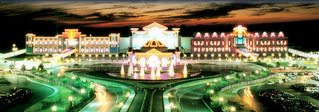
Does this belong in Natchez?
UPDATE: According to an article in the Democrat, both proposals include casinos.
So far the City has not seen fit to ask its citizens what our opinion is, and I feel certain that they won't. However, I'm going to tell them anyway, and I hope you will too. The Mayor and Board of Aldermen meet again on Tuesday, November 28 at 6 pm. If you want to speak, you must call or visit the Mayor's office and ask to be put on the Agenda. Or you could write to the Mayor and/or your Alderman. Or you could just attend the meeting and show your support. If you don't do any of these things, then you have no one to blame but yourself when a casino comes to town.
Check the story about Economic Costs of Casinos.
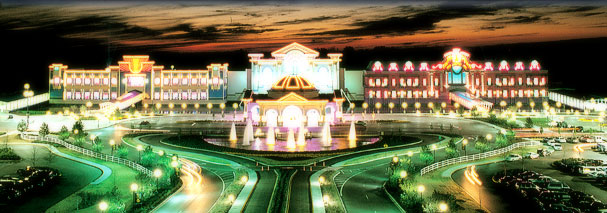
Does this belong in Natchez?
Economic Costs of Casinos
The Mayor and Board of Aldermen say their motivation is economic development for Natchez. Casino operators tend to locate where there are "local yocals" who fall for their glorious tales of positive economic benefits. However, all of the legitimate research that has been done by unbiased economists and other academics show exactly the opposite.
The research shows that legalized gambling eventually causes
increased taxes
loss of jobs
economic disruption of other businesses
increased crime
large social welfare costs for society in general and government agencies
The research shows that legalized gambling eventually causes
For every $1 that gambling brings in taxes, it costs the tax payer at least $3. Gambling makes poor people poorer, causing a drain on social welfare agencies.
With the exception of gambling related businesses like pawnshops, new businesses do not want to locate near casinos, and existing businesses tend to close. Casinos draw from only a 35-50 mile radius, and they kill off any entertainment, restaurant, and hotel businesses in the area and deplete the income available for retail businesses. Any businesses that do survive will experience increased absenteeism and decreased productivity. Interestingly, the best workers - the Type A personalities - are the most likely to become pathological gamblers.
In order to understand why gambling has these effects, you need to understand that about 80% of gambling revenues come from only the 10% of the population that gambles heavily. In other words, casinos feed off the addicts - they're like legalized drug dealers.
The baseline rate of gambling addiction is about .75%. Addiction usually doubles within a 50 mile radius of a casino and increases the closer you get. Poverty increases the chances of addition. Nevado has an addiction rate of 3.5%, but probably due to poverty levels, Mississippi has a rate of 4.9%. So thanks to casinos, we are the poorest and the most addicted state in the country.
Gambling addiction is a serious and destructive disorder that is very hard to treat. Desparate to recover from losses, the addict follows a predictable path. They start by exhausting personal resources, maxing out credit cards, selling insurance policies, selling possessions, borrowing from family and friends. Then they turn to crimes, like fraud, embezzlement, theft, robbery, and violent crimes. Bankruptcy rates are 100% higher in counties with casinos than without. Finally, they may resort to suicide. Nevada has the highest suicide rate in the country.
Will our City officials fall for the bull being fed them by the drug dealing casinos? Or will they pay attention to the overwhelming research showing the devastating effect of casinos? I'm afraid of the answer.

Coming to your riverfront?
Sunday, November 19, 2006
Waiving Building Fees
One of the more brilliant moves (read sarcasm) of the Mayor and Board of Aldermen last Tuesday was to amend the City Ordinance to allow waiving of building permit fees in certain circumstances. What are those circumstances?
One circumstance is for "a bona fide nonprofit organizations, such as Habitat for Humanity". I like the way the City is using this very popular organization to justify its grab for power. It even uses their name in the ordinance itself. They said Habitat had requested that their building fees be waived. This is not true. What Habitat asked for was that the fee be waived for water hookup. They didn't even address this issue at all, because it didn't serve their purposes.
The other circumstance is for "an economic development facility that will foster the development and improvement of the community in which it is located and the civic, social, educational, cultural, economic, or industrial welfare thereof including provision for new employment, increase in the tax base, or otherwise provide a significant economic benefit to the city of Natchez". Whoo! That covers a lot!
But the key to the whole amendment lies in these words: "the Board may grant an exemption, waiver, or discount". Note the use of "may". The requirements are so nebulous that anyone could qualify - but only those that suck up to the Board enough will actually get it. This is a prescription for corruption if I've ever seen one. This Board has no shame!
See the article in the Democrat, the excellent column by Ben Hillyer, and the editorial. The exact wording of the amendment was in the Legals in the November 17 issue of the Democrat - sorry I couldn't find it online.
One circumstance is for "a bona fide nonprofit organizations, such as Habitat for Humanity". I like the way the City is using this very popular organization to justify its grab for power. It even uses their name in the ordinance itself. They said Habitat had requested that their building fees be waived. This is not true. What Habitat asked for was that the fee be waived for water hookup. They didn't even address this issue at all, because it didn't serve their purposes.
The other circumstance is for "an economic development facility that will foster the development and improvement of the community in which it is located and the civic, social, educational, cultural, economic, or industrial welfare thereof including provision for new employment, increase in the tax base, or otherwise provide a significant economic benefit to the city of Natchez". Whoo! That covers a lot!
But the key to the whole amendment lies in these words: "the Board may grant an exemption, waiver, or discount". Note the use of "may". The requirements are so nebulous that anyone could qualify - but only those that suck up to the Board enough will actually get it. This is a prescription for corruption if I've ever seen one. This Board has no shame!
See the article in the Democrat, the excellent column by Ben Hillyer, and the editorial. The exact wording of the amendment was in the Legals in the November 17 issue of the Democrat - sorry I couldn't find it online.
Riverfront Development
Did you know that Natchez has a document on its website about Riverfront Development? You can find it here. It's not very impressive, but at least it's there. By the way, at the end you will see it gives David Gardner as the contact person. I think this explains why he brought the proposal to the Mayor and Board of Aldermen.
How would you like to see this sitting at the foot of Roth Hill?
This is one of the casinos in Tunica MS, which is the third largest gambling site in the county after Vegas and Atlantic City. Check here to see the other casinos in Tunica - and prepare yourself for the coming of big time tacky and sleaze to Natchez. (I guess good taste is not a requirement for public office.)
If you read the article in the Democrat, you know that three companies bid on the development of the Roth Hill property: Northbridge Capital from Edwardsville IL, Lane Company of Atlanta, and the Natchez Riverfront Development Group - not that this tells you anything. Lane Company develops condos and apartments - no history of casinos. Nowadays, most casinos are operated by one of the big companies out of Vegas. My guess is that these three either have an agreement with one of those companies or plan to partner with them. My concern is that these companies do not like to go where there is only one or two casinos. Why would they come here? Do they think we're going to grow into a casino community?
If this goes through, Natchez will be, for all intents and purposes, destroyed.
How would you like to see this sitting at the foot of Roth Hill?
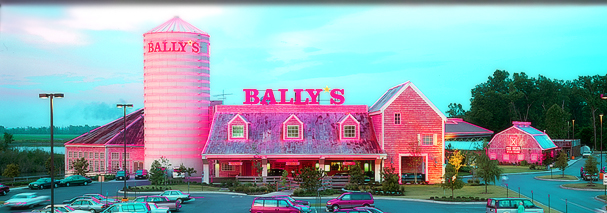
This is one of the casinos in Tunica MS, which is the third largest gambling site in the county after Vegas and Atlantic City. Check here to see the other casinos in Tunica - and prepare yourself for the coming of big time tacky and sleaze to Natchez. (I guess good taste is not a requirement for public office.)
If you read the article in the Democrat, you know that three companies bid on the development of the Roth Hill property: Northbridge Capital from Edwardsville IL, Lane Company of Atlanta, and the Natchez Riverfront Development Group - not that this tells you anything. Lane Company develops condos and apartments - no history of casinos. Nowadays, most casinos are operated by one of the big companies out of Vegas. My guess is that these three either have an agreement with one of those companies or plan to partner with them. My concern is that these companies do not like to go where there is only one or two casinos. Why would they come here? Do they think we're going to grow into a casino community?
If this goes through, Natchez will be, for all intents and purposes, destroyed.
Friday, November 17, 2006
Interesting Information About Management Company
Check out this article in the Times Picayune in July.
New Orleans Hospitality Companies, the company the Mayor and Board of Aldermen want to manage our Convention Center, seems to have some legal problems. Here are some excerpts, but read the whole article.
Very troubling. Don't these dudes ever do any homework?
New Orleans Hospitality Companies, the company the Mayor and Board of Aldermen want to manage our Convention Center, seems to have some legal problems. Here are some excerpts, but read the whole article.
"Paddlewheels, which operates Mississippi River excursions on its Cajun Queen and Creole Queen vessels, is part of Hospitality Enterprises Inc., one of the city's largest locally owned tourism companies. The company filed for Chapter 11 bankruptcy reorganization in May after the Louisiana Supreme Court affirmed a $2.8 million tax judgment in favor of the city of New Orleans in late April. "
"Another Hospitality Enterprises property, the New Orleans Tours bus company, also filed for Chapter 11 bankruptcy reorganization this spring after losing money for a number of years."
"Bankruptcy court is becoming the venue for resolving another long-running dispute: a family feud between the owners of Hospitality Enterprises. . . As questions mount about the extent of debts at New Orleans Paddlewheels Inc., the company's largest shareholder has called for U.S. Bankruptcy Court to either appoint a trustee to manage the firm's affairs or appoint a liquidator to dispose of its assets. "
"In October 2001, Reuther's nephew, lawyer Jim Smith Jr., locked Reuther out of his South Peters Street offices and ousted him, revealing that his titles of chairman and chief executive officer were a fiction because they didn't exist in the company's bylaws. Smith has run the company ever since as its president. . . Reuther's wrongful termination suit has languished in court for the past five years without resolution. "I don't know about you, but I wouldn't hire this guy! Plus I'll have more disturbing info later.
Very troubling. Don't these dudes ever do any homework?
Thursday, November 16, 2006
What the Mayor & Board of Aldermen Are Up To Now!
I've been sick for several days and was unable to attend the meetings of the Mayor and Board of Aldermen. Fortunately, Gwen attended and sent the following report. (Also see this article and this one in the Democrat) - Casey Ann
The board and mayor (as the Finance Committee) met at the mayor’s office with representatives of U.S. Networx to discuss the possibility of a City website. The proposed website would promote “open government” as Irvin Bullet, the rep. for Networx, stated. The website could include individual Ward News, police contact, ordinance information, and board minutes by key word and date. “People want to know what’s going on”, commented Mr. Bullet. Newcomers to the city could access information regarding car tags, preservation and planning guidelines. The boa seemed very supportive of the idea and Ms. Mathis was emphatic about including a mission statement. Currently, there are several Natchez websites and the city has a small webpage included among those websites. Mr. Bullet also commented that Natchez…”hasn’t been sold as a City…” as far as quality of life with parks and recreation. The website funding will come from a $100,000 Planning Grant the city received a year ago. The initial costs are the largest while sustainability is minimal. Mr. Bullet said his firm would teach the City how to maintain the website.
Sounds good to me! I've been pestering the City and the County for ages to join the 21st century and get a presence on the Internet. The County recently voted to do it. - Casey AnnWe convened to City Council Chambers across the street where all boa and officials for the new Convention Center Hotel gathered for an executive meeting. In addition to the boa were Walter Brown, Walter Tipton, Tourism Chairman, Tom Bauer, hotel developer, Warren Reuther, New Orleans Hospitality Consultant, Paul Buckley, hotel manager.
At the open meeting, after the usual preliminaries, the floor was given to Walter Brown to introduce the Bauer delegation. Walter explained that the marketing group from N.O. will possibly negotiate a convention marketing plan and management agreement for both the hotel and the convention center with the city of Natchez. Mr. Bauer was introduced and in his address immediately referred to the hotel as a catalyst for the riverfront development. The hotel property sale will close in Dec.; construction will start in Jan. with an opening by end of 2007. He said Buckley and Reuther will manage the hotel and he cited their particular experience and accomplishments. Mr. Buckley is retired from Hilton Hotels and Mr. Ruther oversees the Super Dome, the Convention Center, the Municipal Auditorium, and the Alaria Center.
Although I think professional management of the Convention Center is an worthy idea, the proposed management companies' connections with casinos definitely worries me. Thanks to Alderman Gray for brining up the fact they were voting on something with little prior notice. God forbid they should let the public know ahead of time. - Casey Ann
Walter Brown then brought before the board the request for Ordinance change to allow a waiver of building/ construction fees for non-profits (Habitat for Humanity), and on this occasion, the desire to waive fees because Bauer’s project will be an economic benefit to the community. Mr. Brown referred to language in the MS Code, Section 21-17-1 and referenced Sect. 90 – 27 “to amend waiver of building fees”. Mr. Brown said the waiver of building fees was a part of the original agreement between the City and Mr. Bauer. Alderwoman Mathis made the motion to “make public our intent to proceed with management of Hotel/Convention Center and all other tourism related activities”. Ricky Gray offered his objection to not having had access to this information prior to the meeting but nonetheless voted to approve the changes. The motion was passed unanimously .
The bids for golf carts were opened and the low bid accepted. Brett Brinegar reported that a $20,000 grant with matching funds was awarded for reprinting of the African American Heritage Tourism brochures. Ms. Brinegar also said the Forks of the Road meeting went well and there would be a second meeting for public comment and a third, wrap-up meeting. Mr. Tipton reported that his department wished to re-bid the security contract for the Visitor Center. They’ve not been completely happy with the current arrangement. Security costs are, in part funded by MDOT, NPS, and some of that money may apply to the cameras they use at the facility. Mr. Tipton said tourism was up a bit since Katrina but not nearly as high as pre-Katrina. 22,000 people have visited the Visitor’s Center and they’ve had $2000 sales in movies. Balloon Race t-shirt sales were up 18%. Garbage Bids were received and opened. The low bid was received from Waste Management (current provider) for $8.15 per household, twice weekly. The awarding of bid was deferred until a later date. Previous charges were $6.75/per household, twice weekly.
The mayor and boa discussed an ongoing effort to hire a lobbyist. The Mayor was to meet with a representative from Thad Cochran’s office that afternoon at 4pm. Ms. Mathis made a motion that Mr. Sanders, City Attorney, write a letter to Mr. Cochran reminding him of the $1.6 million allocated for road repairs for Natchez. She expressed her concern that the money would still be available in light of legislation conducted within “a lame-duck Congress”. Ricky Gray and Joyce Mathis did the usual grilling of Mr. Ivey and Mr. Dawes over grass-cutting, drainage problems, retaining walls, etc. Mr. Gray wants the potential Fire Dept. employees to appear before boa before they’re hired.
Requested Proposals for riverfront development will be received on Nov 16 and prospective developers will be interviewed first week of December. The Mayor said there were many strong proposals and outside help would likely be needed in determining what is best for Natchez.
Outside help? You don't suppose he might consider the citizens of Natchez? Nah!I'm also awaiting a report from Chesney on the Trust for Public Land possibilities. It will probably be the next post on the blog.
Sunday, November 05, 2006
An Exciting Opportunity!
An official from the Trust for Public Land is coming to Natchez regarding the Bluffs property! Why is this exciting?
The Trust for Public Land (TPL) is a national, nonprofit, land conservation organization that conserves land for people to enjoy as parks, community gardens, historic sites, rural lands, and other natural places, ensuring livable communities for generations to come. The TPL website details their depth of practical experience in preserving that which is unique and special about a place for the public, which in turn spurs economic growth and development that is in the long term interest of the entire community. Since 1972, TPL has worked with willing landowners, community groups, and national, state, and local agencies to complete 3,313 land conservation projects in 46 states, protecting more than 2.2 million acres.
It's exciting that an organization of this stature is interested in our Bluffs, which says something about its uniqueness and value. However, TPL only works with willing communities.
Don Morrow, Director of Projects for the Southeast Region of TPL, will be visiting Natchez to determine if the city and the citizens are open to TPL assistance in developing the Bluffs.
To assist him in making this determination, Morrow will be touring the site and meeting with the Mayor and others in the community. There will also be an opportunity for citizens to meet with him.
TPL Public Meeting
Wednesday, November 8, 5:30-6:30 pm
Armstrong Library
I strongly encourage you to attend and learn about this thrilling opportunity. Wouldn't it be wonderful if everyone in Natchez came together to produce something great for the community?
Friday, November 03, 2006
Forks, Spoons, Plates, & Glasses
Warning: I'm sort of stretching these metaphors. It was just my way of combining several topics into one article.
Forks: Thursday night, I attended a meeting regarding the Forks of the Road. The City of Natchez owns the Forks of the Road site and would like to transfer it to the Natchez Historical Park, which would like to have it. However, since the Natchez Historical Park is part of the federal government, it's not that simple. First, there must be a study (surprise, surprise), which is anticipated to take about a year. The study is called the Boundary Adjustment Study - only the federal government could come up with such a convoluted name. The meeting Thursday (called a Scoping Meeting) was the first step in that study. It was an opportunity for the community to communicate its goals for the site. There were about 30 people in attendance, both black and white. There were no Aldermen present. The Mayor was there, as this is a priority of his. Because of a death in his family, he had to leave early, but City Grants Director Brett Brinegar was there. There were some very eloquent and emotional remarks. If you would like to comment, email forks@mangi.com. The next step is draft recommendations from the consultants, after which there will be opportunity for more public input. The Natchez Democrat had an editorial on Wednesday urging us not to rush the Forks project. I don't think they have anything to worry about.
Spoons. On Wednesday, I attended the Working Session of the Mayor and Board of Aldermen, where they discussed the much delayed City Budget. I would have liked to have used the metaphor of knives, indicating they were carving a creative budget. However, spoons seemed more appropriate, since they were just scooping in the money. I have been involved in developing countless budgets in my life, but none was like this one. There was not even a calculator in the room - much less a spreadsheet program.
Basically, this appeared to be their strategy. They started with the expenditures from last year. Then they added the items they had already voted on, mainly the raises for themselves, the firefighters, and police. They subtracted this from the money they expect to receive. This left them with a little over half a million dollars to spend. In the previous Working Session, the Mayor asked them to prepare a list of their priorities. He started with his list. Then each Aldermen presented their list, based on the needs/wants of their wards and/or committees. The Mayor kept track of the projects and their costs and calculated the total cost on a flip chart. That was it. (For a report on which projects were requested, see this article in the Democrat.) Since the total cost was more than the revenues available, they will eliminate projects at their next meeting. What was most amazing to me was how little information the Aldermen had about their projects. They would ask questions of City Clerk Donnie Holloway , who would have to run down to his office to get an answer. I feel certain the Department heads could have done a better job of presenting these requests. Also, there apparently was no evaluation of expenditures to see if they are appropriate. Aldermen Gray did ask for a 3% across the board reduction, but no one paid any attention. I hope after the next election there is at least one person elected with budget experience.
Plates. Also on Thursday night was a meeting of a group interested in creating a college of art and design in Natchez modeled after the one in Savannah GA. Check out this excellent article describing the economic benefits, where you can see why it would be such a good match for Natchez. What an exciting idea! There were close to 100 people there, so lots of people are energized over this concept. How's that for a big helping of dessert for your plates? I was unable to attend, since I was at the Forks meeting. However, I have asked someone to write a report for me to post here.
Glasses. Natchez has created the newest chapter of Drinking Liberally - the first in Mississippi, although there are 172 chapters nationwide. What is Drinking Liberally? Basically, it's an informal, progressive social group. Drinking Liberally gives like-minded, left-leaning individuals a place to talk politics. You don't need to be a policy expert and this isn't a book club - just come and learn from peers, trade jokes, vent frustration, and hang out in an environment where it's not taboo to talk politics. You can raise your spirits while you raise your glass, and share ideas while you share a pitcher. Join us at our first meeting on Wednesday, November 8 at 7 pm (when we will hopefully be celebrating election results from Tuesday) at the Natchez Historic Inn at 201 North Pearl in the glassed in room off the courtyard. All liberals invited!
PS Click on the time below to see the comments along with the story, and you can then click on Post a Comment to add your own. Please register a name before commenting (rather than using Anonymous), so that others can respond to you.
Forks: Thursday night, I attended a meeting regarding the Forks of the Road. The City of Natchez owns the Forks of the Road site and would like to transfer it to the Natchez Historical Park, which would like to have it. However, since the Natchez Historical Park is part of the federal government, it's not that simple. First, there must be a study (surprise, surprise), which is anticipated to take about a year. The study is called the Boundary Adjustment Study - only the federal government could come up with such a convoluted name. The meeting Thursday (called a Scoping Meeting) was the first step in that study. It was an opportunity for the community to communicate its goals for the site. There were about 30 people in attendance, both black and white. There were no Aldermen present. The Mayor was there, as this is a priority of his. Because of a death in his family, he had to leave early, but City Grants Director Brett Brinegar was there. There were some very eloquent and emotional remarks. If you would like to comment, email forks@mangi.com. The next step is draft recommendations from the consultants, after which there will be opportunity for more public input. The Natchez Democrat had an editorial on Wednesday urging us not to rush the Forks project. I don't think they have anything to worry about.
Spoons. On Wednesday, I attended the Working Session of the Mayor and Board of Aldermen, where they discussed the much delayed City Budget. I would have liked to have used the metaphor of knives, indicating they were carving a creative budget. However, spoons seemed more appropriate, since they were just scooping in the money. I have been involved in developing countless budgets in my life, but none was like this one. There was not even a calculator in the room - much less a spreadsheet program.
Basically, this appeared to be their strategy. They started with the expenditures from last year. Then they added the items they had already voted on, mainly the raises for themselves, the firefighters, and police. They subtracted this from the money they expect to receive. This left them with a little over half a million dollars to spend. In the previous Working Session, the Mayor asked them to prepare a list of their priorities. He started with his list. Then each Aldermen presented their list, based on the needs/wants of their wards and/or committees. The Mayor kept track of the projects and their costs and calculated the total cost on a flip chart. That was it. (For a report on which projects were requested, see this article in the Democrat.) Since the total cost was more than the revenues available, they will eliminate projects at their next meeting. What was most amazing to me was how little information the Aldermen had about their projects. They would ask questions of City Clerk Donnie Holloway , who would have to run down to his office to get an answer. I feel certain the Department heads could have done a better job of presenting these requests. Also, there apparently was no evaluation of expenditures to see if they are appropriate. Aldermen Gray did ask for a 3% across the board reduction, but no one paid any attention. I hope after the next election there is at least one person elected with budget experience.
Plates. Also on Thursday night was a meeting of a group interested in creating a college of art and design in Natchez modeled after the one in Savannah GA. Check out this excellent article describing the economic benefits, where you can see why it would be such a good match for Natchez. What an exciting idea! There were close to 100 people there, so lots of people are energized over this concept. How's that for a big helping of dessert for your plates? I was unable to attend, since I was at the Forks meeting. However, I have asked someone to write a report for me to post here.
Glasses. Natchez has created the newest chapter of Drinking Liberally - the first in Mississippi, although there are 172 chapters nationwide. What is Drinking Liberally? Basically, it's an informal, progressive social group. Drinking Liberally gives like-minded, left-leaning individuals a place to talk politics. You don't need to be a policy expert and this isn't a book club - just come and learn from peers, trade jokes, vent frustration, and hang out in an environment where it's not taboo to talk politics. You can raise your spirits while you raise your glass, and share ideas while you share a pitcher. Join us at our first meeting on Wednesday, November 8 at 7 pm (when we will hopefully be celebrating election results from Tuesday) at the Natchez Historic Inn at 201 North Pearl in the glassed in room off the courtyard. All liberals invited!
PS Click on the time below to see the comments along with the story, and you can then click on Post a Comment to add your own. Please register a name before commenting (rather than using Anonymous), so that others can respond to you.
Subscribe to:
Posts (Atom)

 Posts
Posts


